


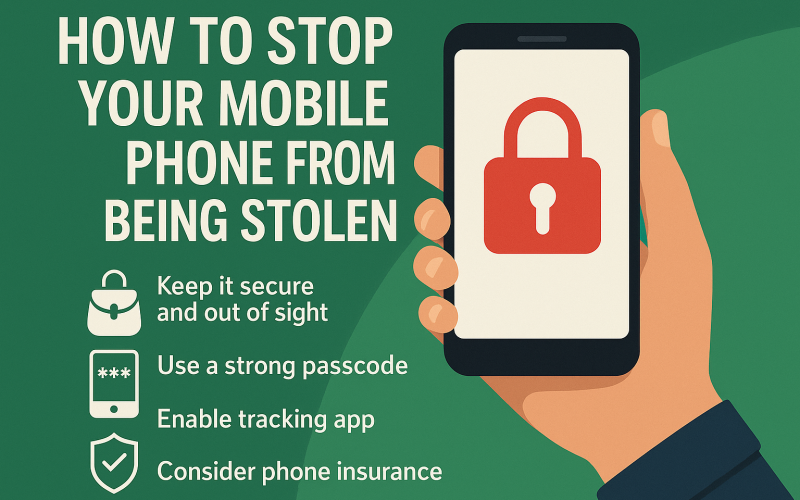
Your smartphone is your camera, wallet, ID, and personal assistant all in one, which makes it a prime target for thieves. In 2025, phone theft remains one of the most common urban crimes worldwide. Fortunately, a mix of good habits, smart security settings, and the right insurance can protect both your device and your peace of mind.
Here’s how to help stop your mobile phone from being stolen and how to recover, replace and secure your data if it ever is.
The simplest way to protect your phone is to make it a difficult target. Most thefts happen when a device is left in plain sight on café tables, car seats, or bar counters. Keep your phone out of reach when not in use and if you must check it in public, step aside from crowds or face a wall so no one can grab it easily.
Where you store your phone matters. A front pocket or a zipped inner bag compartment is much safer than an open handbag or back pocket. Travelers and commuters should consider anti-theft backpacks with lockable zippers and crossbody straps that stay in view. Even a simple phone leash can deter opportunistic phone snatchers.
Presentation also plays a role. A bright, branded case can signal that your phone is expensive, opt instead for a neutral, non-flashy cover that draws less attention.
Even if your phone is stolen, you can make it virtually worthless to anyone else. Start by setting a strong passcode, at least six digits and combine it with biometric security like Face ID or a fingerprint. Set your screen to auto-lock after one minute of inactivity.
Turn on your phone’s built-in tracking tools:
These tools allow you to find, lock, or erase your phone remotely. Keeping your operating system updated ensures you always have the latest security patches. Android owners should disable USB debugging, while iPhone users can enable USB restricted mode for extra protection.
Finally, encrypt your backups and require authentication before using payment apps or autofill this makes it harder for anyone to access sensitive data.
Your accounts are often more valuable than the phone itself. Enable two-factor authentication (2FA) on your main accounts, email, Apple or Google ID, social media and banking apps. Use an authenticator app such as Google Authenticator, Authy, or Microsoft Authenticator instead of SMS codes, which can be intercepted.
Review the devices connected to your accounts every few months and remove old or suspicious ones. Regularly updating your passwords also keeps your data safer in the long term.
Even with the best precautions, theft or loss can still happen. That’s where mobile phone insurance becomes essential.
A comprehensive policy such as those provided by tinhat™ can cover theft, loss, and accidental damage, and may even include data recovery or unauthorised call protection. When choosing a policy, compare:
Having mobile phone insurance won’t prevent theft, but it can significantly reduce the stress and cost of replacing your device. For more information on mobile phone insurance read our full guide here.
Small accessories can go a long way in keeping your phone safe. A Bluetooth tracker like an Apple AirTag or Tile Tracker can help locate your belongings even if your phone is turned off.
Frequent travelers should look into anti-theft bags with cut-resistant straps and hidden zippers. Motion-sensitive alarms that sound if your bag moves unexpectedly can deter pickpockets. For privacy, a screen protector with a narrow viewing angle helps prevent strangers from seeing your pin, messages or payment details.
If your phone goes missing, stay calm and act quickly but safely. Don’t chase a thief. Instead, use Find My iPhone or Find My Device from another device or computer to locate your phone. If it appears nearby, call local authorities rather than approaching it yourself.
Lock the phone remotely and display a message with a contact email or alternative number. If recovery seems unlikely, erase the data remotely to protect your privacy (though this may disable tracking).
Next, contact your mobile carrier to suspend your SIM card and block your phone’s IMEI number. Change your passwords for your Apple or Google account, email, and financial apps. File a police report and notify your insurance provider if you have coverage. If your mobile wallet or payment apps were active, contact your bank immediately.
It’s easy to overlook simple security habits that matter most. Weak PINs like “1234,” leaving Bluetooth or Wi-Fi always on, and saving passwords in screenshots can all make your phone vulnerable. Avoid posting about your stolen device on social media, scammers sometimes use such posts to pose as recovery agents. Stick to verified channels like your carrier, insurer, or local police.
Protecting your smartphone isn’t about paranoia, it’s about prevention. By combining strong security settings, smart daily habits and reliable mobile phone insurance, you can make your device far less attractive to thieves and recover faster if the worst happens.
In 2025, staying secure is less about luck and more about preparation. Take a few minutes today to lock down your settings and review your insurance, your future self will thank you.